
Repair Toolkit
What can I do if my landlord won't fix something?
General information. Not legal advice. This page explains California habitability law and Los Angeles tenant rules as of 2026. Statutes, deadlines, and city ordinances change. If you want to know what to do in your specific case, give us a call.
The law calls this habitability.
California law (Civil Code sections 1941 and 1941.1) says that every residential rental unit has to meet basic livability standards. That’s called the implied warranty of habitability. It applies whether your lease says so or not. You can’t sign it away.
Habitability covers things like:
- Effective waterproofing and weather protection (roof, walls, windows that close).
- Working plumbing and gas, in good working order.
- Hot and cold running water connected to a sewage system.
- Heating that works.
- Electrical wiring, outlets, lighting that work and are safe.
- Clean and sanitary conditions, free from pests and rodents.
- Floors, stairs, and railings in good repair.
- Working locks and exterior doors.
- Smoke detectors and carbon monoxide detectors that work.
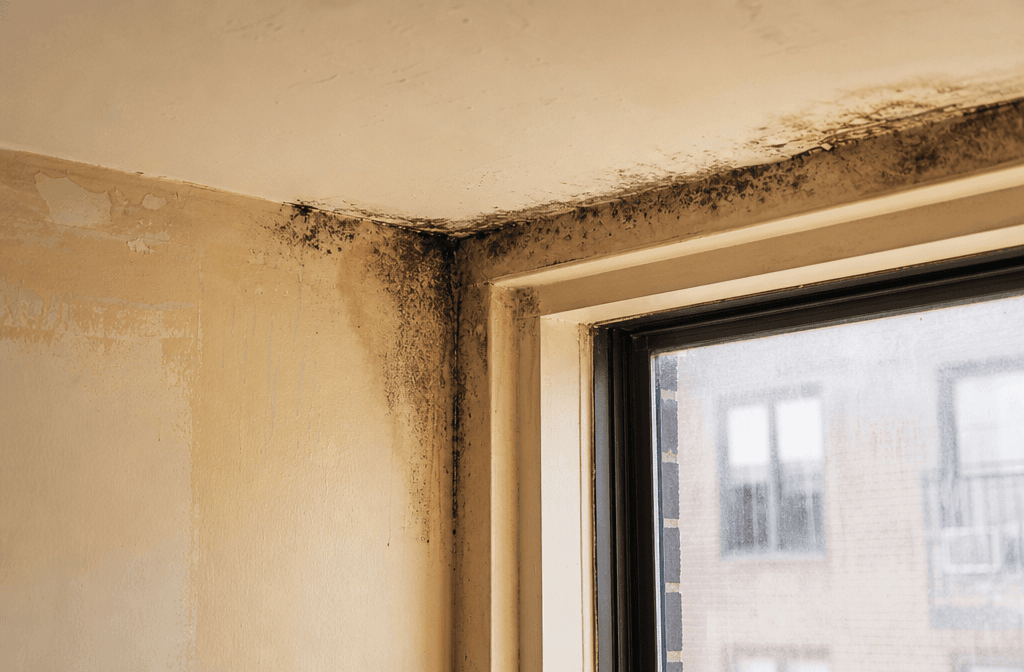
Mold isn’t named in the statute, but mold serious enough to affect your health is a habitability problem under both state law and Los Angeles Health & Safety Code section 17920.3. Visible mold tied to a leak the landlord hasn’t fixed is almost always a habitability issue.
Cosmetic problems (faded paint, a worn carpet, a small crack) usually aren’t habitability issues. The line is whether the problem affects your safety, health, or basic ability to live in the home.
Where you stand on the repair clock.
Two questions. We’ll plot your written-notice date against the reasonable-time windows California courts use, and tell you what remedies are available right now.
How long is reasonable?
California law gives the landlord a reasonable time to make repairs after you ask. There isn’t a single number that works for every situation, but courts have generally treated 30 days as a default, with shorter windows for problems that are dangerous right now.
- Emergencies (no heat in winter, no running water, sewage backup, broken exterior lock). Reasonable time is often 24 to 72 hours.
- Serious problems (mold affecting health, persistent leaks, broken appliances the landlord is responsible for, pest infestations). A few days to 30 days.
- Standard repairs 30 days is the working default.
The clock starts when you give the landlord written notice. Verbal complaints don’t reset the clock. A text counts as written. An email counts. A note left under the door counts. The clearer your written notice, the better.
You have several ways to push back.
Once you’ve given written notice and a reasonable time has passed, California gives you several remedies. Each fits a different situation. Do not combine them without legal advice. Some of these can be used wrong and make your situation worse.
- 1. Repair and Deduct (Civil Code 1942). You hire someone to fix the problem and deduct the cost from your next rent. The cost can’t exceed one month’s rent, you can only use this remedy twice in a 12-month period, and you have to give written notice and reasonable time first.
- 2. Rent Withholding. You stop paying rent until the landlord fixes the problem. This is the most legally risky option. Done correctly it forces repair. Done incorrectly it gets you evicted for non-payment. Talk to a lawyer before withholding rent.
- 3. Complain to the housing department. For the City of LA, call LAHD and file a Code Enforcement complaint. For unincorporated LA County, file with LA County Department of Public Health. Free, creates an official record. Best done early.
- 4. Constructive Eviction. If the problem is so bad you can’t reasonably live in the home, the law treats it as if the landlord forced you out. You can leave, stop owing rent, and sue for the costs of moving.
- 5. Sue for damages. You can stay and sue your landlord for the harm caused: reduced rental value, out-of-pocket costs, sometimes emotional distress.
Document everything.
The strongest habitability cases are the ones where the tenant kept records. Some of this you can do tonight.
- Put every request in writing. Text, email, certified letter. Keep copies.
- Photograph the problem. Date-stamp the photos. Take video of mold growth, leaks, broken appliances. Re-photograph weekly if the problem persists.
- Save communications from the landlord. Texts, emails, voicemails, written notices.
- Keep a log. Date, time, what happened, who you talked to, what they said.
- Save receipts. Hotel during a no-heat week, medical visit for mold-related symptoms, mold-test kit.
When this stops being a paperwork problem.
Most habitability problems get resolved without a lawyer. A clear written request, a Code Enforcement complaint, or a "repair and deduct" notice usually moves the landlord.
It’s worth calling a tenant attorney when:
- You’ve put it in writing and the landlord still won’t fix the problem after a reasonable time.
- The problem is serious enough to be affecting your health.
- You’re thinking about withholding rent or moving out.
- The landlord retaliated against you after you asked.
- You’ve already paid for repairs out of pocket and want to recover the cost.
- Multiple tenants in the building have the same problem.
Got it. Now what?
This guide is free. Talking to us is too.
If your situation matches what we just walked through, call us. If you're still figuring it out, call us anyway. We don't bill for the first conversation.
Common questions.
Habitability isn't a courtesy. California Civil Code 1941.1 requires it. The remedies are real — and they cost less to use than most people think.
One call can clarify everything.
We listen to what's broken, look at the dates, and tell you which remedy fits — repair-and-deduct, code complaint, or something else. Most cases resolve without litigation.